






















































































































































Tonight
Ten for the evening
One to ten. Newest, most watched, highest on the Living Meter. Prime, Disney+, Hulu, Hallmark, Acorn, and Netflix.
Work, a parish, and women who do not leave when the hour gets ugly. Put it on.
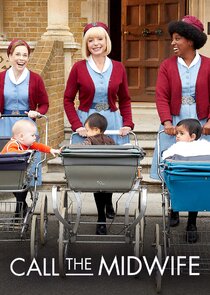
This is the rare show on a home screen that knows what a neighborhood is for. A woman is in labor. Someone comes. The someone is trained, tired, and answerable to a house of women who pray and to a street that will still be there on Monday. The stories do not pretend every birth is a blessing without a cost. They do insist that the cost is borne by people, not by a mood.
Watch it. Then notice how little of your own week is spent on a person who cannot pay you back. The standard is not the habit or the bicycle. It is the decision to be in the room when it would be easier to be somewhere cleaner.
Industry
6/10
The labor is the plot. Birth is work, and so is the visit the next morning.
Household
6/10
Houses that are cramped, married, widowed, or barely holding. The child still has to arrive somewhere.
Piety
5/10
Prayer is not decoration. The nuns mean it, and the nurses who do not still keep the watch.
Courage
5/10
They go into rooms that smell, and they do not flinch for the camera.
Republic
5/10
A neighborhood, a clinic, the poor. The unit is the parish, not the personality.
Temperance
4/10
Suffering is shown and then bound up. It is not lingered over for sport.
Truth
5/10
The hard cases are told plainly: poverty, shame, a secret, a child no one planned.
Stewardship
6/10
Every episode asks what will be left standing for the child who just took a breath.
Live historicallyShow up this week for one person whose trouble will not improve your story.
Keep it. Competence, calm, and a square peg of a problem. One of the best pictures of work we have.
Lovell wants the moon and gets a problem instead. The film's heroism is not a speech on the lawn. It is a CO2 canister, a trajectory, a wife who is not given a false comfort, a crew that does not waste air on panic. Failure is not a metaphor. It is a set of constraints. They respect the constraints and the men come home. A country watching is the public part, and it is not tacky. People should care whether the strangers in the capsule live.
Watch it with a young person who thinks heroism is a feeling. Then look at the table of parts and say: this is what it looked like.
Industry
10/10
Engineering under a clock.
Household
7/10
The families on the ground are not extras.
Piety
4/10
Awe at the work. Little religious language, a real gravity.
Courage
8/10
Calm nerve.
Republic
8/10
A public effort that tells the truth about the failure.
Temperance
8/10
Panic refused.
Truth
9/10
They say it is broken.
Stewardship
9/10
It hands on a respect for skill in the service of bringing people back.
Live historicallyWhen something breaks, gather the people who know the machine and tell them the truth.
A serious attempt to show Jesus among working people. It invents scenes. It does not invent the claim.
Most screen Jesus is either a poster or a scandal. This one eats with people who have jobs, and the jobs matter. The writers add conversations the Gospels do not record, the way an illustrated children's Bible is not the text itself.
Watch it as a way into the text, then open the text. The show is the porch, not the room.
Industry
8/10
Fishermen, tax collectors, a tent-maker's world. Work is visible.
Household
7/10
Homes, dinners, a mother, a wedding. The ministry interrupts real tables.
Piety
9/10
The subject is worship, and the show is not embarrassed.
Courage
7/10
Following costs a boat, a post, a reputation.
Republic
5/10
Rome is occupied fact. The politics stay smaller than the person.
Temperance
7/10
It is willing to be slow. That is a discipline.
Truth
7/10
The words of Jesus are mostly the words. The added scenes should be labeled as added.
Stewardship
8/10
It is made to be watched with children and again in twenty years.
Live historicallyAfter an episode, read the chapter it came from. If the show added a scene, say so.
Keep it. Remember the dead by name. Ambition that erases a family is the villain.
Miguel's hunger for a song is not the sin. The sin, in the story he uncovers, is leaving a child for a stage and letting the story be rewritten. The film's afterlife is folk theology, brightly made, and a house that believes differently should say what it believes rather than panic at the marigolds. The usable truth does not depend on the metaphysics. The dead are kept by memory that is specific. A picture on an ofrenda is not a brand. It is a person.
Watch it, and let the last song be about the great-grandmother, not about fame. If a child only wants the skeleton, you have not finished the movie.
Industry
7/10
Shoemaking is honored. Music is work too.
Household
9/10
The whole plot is a family remembering.
Piety
6/10
An honor of the dead that a Christian house can respect and also locate.
Courage
7/10
He risks the crossing for a name.
Republic
5/10
A family ban is a kind of law, and it is revised by the truth.
Temperance
6/10
Fame is refused as the highest good.
Truth
9/10
The hidden crime is a theft of memory and of songs.
Stewardship
9/10
It hands on the duty to say their names.
Live historicallySay the full name of one person your house does not talk about, kindly.
A department, a town, and a woman who likes the work. Keep the early years.
Leslie Knope is ridiculous and she is right about the part that matters. A park is a real good. A hearing is how a town says yes. The show's best seasons believe that government is a pile of annoying people doing a necessary job, not a punchline and not a religion. Andy and April grow up. Ron wants to be left alone and still shows up.
Later seasons fall in love with the characters and forget the department. Watch it while the pit is still a pit and the meeting still matters. It is one of the few comedies that thinks a neighbor is a civic fact.
Industry
8/10
Public work is the joke and the honor. The binder is a love letter.
Household
6/10
Marriages happen and are kept. The office is a second household, mostly for the good.
Piety
3/10
Her reverence is for the town, not a creed.
Courage
7/10
She risks looking like a fool in a hearing, on purpose.
Republic
9/10
Pawnee is the subject. Duty to it is not the ironic part.
Temperance
7/10
Excess is a snack, not the moral.
Truth
7/10
The hearings are public. The lie does not survive the minutes.
Stewardship
8/10
A park is something the children who are not born yet can use.
Live historicallyDo one small public thing this month: a meeting, a cleanup, a call to a clerk.
Responsibility still the thesis. Judge it by whether the aunt and the block stay real.
Another telling of the boy who cannot leave a smaller person in trouble. The neighborhood is the right word for it: not a universe, a few blocks, a school, the people who notice he is tired. When the series stays there, it is doing the Spider-Man work, which is one of the few superhero works this desk respects. When it becomes a prelude to a larger war, it is a commercial.
Older children. Watch the hours about the promise to the dead and the living. A power that does not cash out as a kept promise is only a stunt.
Industry
6/10
School and a double life. The ordinary work is what he keeps failing and returning to.
Household
6/10
An aunt, friends, a block. The house is the reason the mask is heavy.
Piety
3/10
A vow, not a church.
Courage
8/10
He goes toward the person screaming.
Republic
6/10
A neighborhood is the republic at the size he can actually serve.
Temperance
6/10
The temptation is to be admired. The correction is to be on time.
Truth
7/10
Great power, great responsibility — the line is still true if the show does not wink.
Stewardship
7/10
A boy learning he owes the next person on the sidewalk.
Live historicallyHave a teenager name one person who is worse off if they do not show up, and show up.
A craft, a village, and a lighter case. Pleasant. Do not ask it to be more than that.
Jean White comes to France to settle a death and stays because a village will have her. The cases are cozy, which means the danger is arranged to be survivable and the jokes arrive on time. That is a limitation, not a scandal. A story can be small and still be about work and neighbors.
Do not confuse it with All Creatures or with a serious detective. Watch it on a tired night when you want a town that still eats together. Then put one real object in your house back where it belongs, or give it to the person it was actually for.
Industry
7/10
She knows objects: what they are, what they are worth, and when a story about them is a lie.
Household
6/10
Widowhood is the start. The village slowly becomes the house she did not plan.
Piety
4/10
Kindness stands in for piety. It is real kindness, and it is not a faith.
Courage
6/10
She asks questions a polite guest would leave alone.
Republic
7/10
A small town with a mayor, a neighbor, and a café is still a community with duties.
Temperance
7/10
The mysteries are mild. Nobody is being trained to enjoy a cruelty.
Truth
6/10
An antique with a false provenance is a small lesson in truth. Some hours forget the lesson.
Stewardship
5/10
She is building a life in a place. Posterity is a hope, not the plot.
Live historicallyReturn one borrowed thing, or give away one object you are keeping out of habit. Tell the person why.
A real family, a devout mother, a father who goes to work. The laugh is sometimes at them. The love is not.
The joke of the premise is that a brilliant child is hard to live with. The surprise, if you only know the later sitcom, is that this one loves the people who live with him. George goes to work. Mary prays and is not treated as an idiot for it, even when the writers want the laugh. Missy and the grandmother keep the house from becoming a shrine to the prodigy.
Good for the family past the youngest years. Some episodes aim a joke at church or at a parent's body that you can skip without losing the story. Keep the ones where the boy has to apologize.
Industry
7/10
A coach, a cafeteria, a factory of ordinary days. The genius still has to be a son.
Household
8/10
Marriage under strain, and they stay. A grandmother, twins, a baby. The table is crowded on purpose.
Piety
7/10
Mary's faith is not a costume. The show argues with it and does not only sneer.
Courage
5/10
The brave acts are small: a father backing a strange child, a boy telling the truth in a church that wanted quiet.
Republic
6/10
A Texas town with a church, a school, and a football field that is the local senate.
Temperance
7/10
The excess is verbal. The home is not a party.
Truth
7/10
Sheldon is factually right and often humanly wrong, and the show usually knows the difference.
Stewardship
7/10
An odd child is being carried by people who will not be famous for it.
Live historicallyLet the odd child in your house be corrected once, kindly, and also defended in public.
Work, a code, a daughter, a city. Adult television in the old sense.
Harry Bosch's line, borrowed from the novels, is that everybody counts or nobody does. That is a republican sentence hiding inside a cop show. He works. He is difficult in the way craftsmen are difficult. He has a daughter, which keeps him from being another lone weapon with a badge.
It is still a procedural, with the procedural's faith that the right man in the right job can hold a city together. That faith is incomplete and it is better than the alternative on offer, which is that the job is a joke. Watch it if you want to remember what competence in the service of a neighbor looks like when nobody is going to clap.
Industry
9/10
The job is the character. He is useful, and he stays useful.
Household
6/10
A daughter, an imperfect house, and a man trying not to vanish from it.
Piety
4/10
The code is secular and stern. It functions like a conscience.
Courage
7/10
He will ruin his career before he will drop a victim.
Republic
7/10
The city is a real place with politics, not a backdrop.
Temperance
6/10
Dark, not debauched. The case is the appetite.
Truth
8/10
Everybody lies. He is angry about it for professional reasons.
Stewardship
6/10
Leaving a city slightly more honest is the inheritance.
Live historicallyDo the unglamorous part of your job all the way to the end today. No audience required.
Freedom without much order. Loyalty with a whole heart. The crew is the house.
Luffy wants to be king of the pirates, which is not a civic ideal, and the live-action show is loud about it. Under the shouting is something the standard recognizes instantly: a small company of people who will not sell each other. Found family is an overused phrase. Here it behaves like an old one. They eat together. They train. They turn the ship around.
Do not take the lawlessness as wisdom. A republic is not a pirate ship, and a man who only loves his friends can still be a terror to everyone else. Take the fidelity. In a catalog full of lone assassins, a crew that keeps its word is almost shocking. Watch it for that, and say so out loud, or the straw hat is all a kid will copy.
Industry
6/10
They train, they sail, they get better at a craft. Even the fool works.
Household
7/10
Not a marriage plot. A crew that functions as a household of fidelity.
Piety
4/10
Dreams are the religion. Some of them are just greed with a flag.
Courage
8/10
They go back for each other. Repeatedly. At cost.
Republic
5/10
Liberty yes, law rarely. A pirate is a poor model of a citizen.
Temperance
6/10
The violence is cartoon-bright. The loyalty is not sneering.
Truth
7/10
A declared dream, kept in public, is a kind of word.
Stewardship
6/10
The treasure is less interesting than the people they refuse to lose.
Live historicallyFeed your people on purpose this week. Same table, same time, nobody fetching a better offer.