
































































































Tonight
Ten for the evening
One to ten. Newest, most watched, highest on the Living Meter. Prime, Disney+, Hulu, Hallmark, Acorn, and Netflix.
A lesson at the end, on purpose. The family can bear the lesson. So can yours.
These stories were built to be read aloud and then obeyed a little, and the television version keeps that shape. Papa is vain and wrong fairly often, and he is still the father. Mama is not a punchline. Brother and Sister are selfish in the ordinary way and are asked to repair it before the sun goes down. A child can feel managed by the moral. Being managed toward a virtue is not an insult at five.
Good for Kiki. Watch beside her and do the thing the episode named before the evening is over.
Industry
6/10
Papa has a shop. Mama keeps the house. The cubs have chores they try to skip.
Household
9/10
The tree house is the world. A fault is corrected inside the family, not by a cooler friend.
Piety
5/10
Gratitude and a rule. Simple enough for the age, and not embarrassed.
Courage
6/10
Owning up is the brave act, drawn so a five-year-old can see it.
Republic
7/10
A small town of bears with a mayor, a school, and neighbors who notice.
Temperance
8/10
Too much honey, too much spending, too much teasing. The plot is appetite meeting a limit.
Truth
8/10
The cubs lie and the lie is not charming for long.
Stewardship
8/10
The lesson is made to be repeated to a younger sibling. That is the design.
Live historicallyPick the fault from today's episode and correct that same fault, once, in the real house.
The boat is a true piece of work. The new school adds a crush and a scandal. Thirteen is the age it was made for, which is why you sit there.
Miku Martineau plays a girl whose life has already been decided by a man's flight, and who answers by learning the one job on a crew that is not about being the strongest body. That is a good story. The show is also a teen drama, so Josh and Cam arrive on schedule, and the father's crime stays in the background like weather.
Watch the boat. Name the weather. If the romance becomes the reason to press next, you have learned what the account will be offered tomorrow.
Industry
8/10
Coxing is a skill: weight, call, the boat going straight because one voice is steady.
Household
5/10
A mother and a daughter starting over. The father is a hole in the house.
Piety
3/10
No creed. A team has a code, which is thinner.
Courage
7/10
She asks for a seat she was not offered.
Republic
5/10
A school team is a small commons. The town has already judged her name.
Temperance
4/10
Rated for teens. Rivalry and attraction are doing a share of the work.
Truth
6/10
The family's disgrace is not a rumor she is allowed to dodge.
Stewardship
6/10
An eight-person boat only moves if nobody makes it about himself.
Live historicallyHave her try a task where her job is to make other people better, not to be seen.
An older woman hands a boy a harder use for his nerve. Watch it awake. The cases are not for children.
Harriet Wild is bored of being finished, and a teenager on her street is bored of being written off. The partnership is the part worth keeping: an old mind and a young one, pointed at a fact instead of at a feed. That can be a kind of apprenticeship.
It is also a lark about murder, and a lark about murder trains the wrong appetite if you let it. Not for children. Watch the hours where she makes the boy read, look, and tell the truth. Turn off the hours where the crime is only an excuse for a wink. Then give a younger person a real problem and stay while they work it.
Industry
6/10
She has a mind and she finally spends it on something other than a classroom she has left.
Household
5/10
A grandmother's house, a boy who needs a task. The family is fractured and only partly repaired.
Piety
4/10
Books are her scripture. A soul is assumed, not answered for.
Courage
6/10
Both of them walk toward trouble a sensible person would report and leave.
Republic
6/10
They poach the police's work. Sometimes that is loyalty to a victim. Sometimes it is a hobby.
Temperance
5/10
Drink and cheek are part of her charm, and the show likes the charm too much.
Truth
6/10
A poem is not evidence. On the better hours she remembers the difference.
Stewardship
5/10
The good of it is a boy given a craft instead of a gang. The show only half commits.
Live historicallyGive a younger person one hard, real problem this week, and do not take it back the moment it gets difficult.
Keep it. Excellence is not a sin. Neither is leaving your family out of the glory.
Bob is dying of a job that forbids him to be what he is, and the film is right that a forced mediocrity helps no one. He is also wrong to sneak, to lie to Helen, and to forget Dash and Violet while he poses. Syndrome is what resentment does with a gift: if I cannot have it, no one will, and I will sell a version of it. The baby, the mother on the jet, the shy girl who has to be visible: the action serves the household instead of pausing it.
A family with children who are good at something should watch this and talk about both halves. Do not dull them. Do not let them vanish into the specialness.
Industry
8/10
Mastery, and the boredom of not using it.
Household
9/10
The family is the true team.
Piety
4/10
A moral code among heroes.
Courage
8/10
They go back for one another.
Republic
6/10
A public that sued its protectors and got smaller.
Temperance
6/10
Glory is the temptation.
Truth
7/10
The lie to his wife is exposed.
Stewardship
8/10
It hands a gifted child a family to come home to.
Live historicallyUse the strong thing you are good at for the people in your own kitchen first.
A found house, a real apology, and a way home. Good for the middle years if you watch the turn.
Anne starts as a girl who steals a music box to impress friends who were using her. The Plantar family — a grandfather, a young frog, a tadpole — takes her in and expects work. The show is funny and then it is about whether she will tell the truth to the girls she left, and whether a person can change enough to be allowed back.
The invasion plot gets large. The part that belongs on this desk is smaller: a girl who learns that loyalty is not the same as going along, and a family that is not hers by blood and is hers by care. Stay for the apology. Leave if it becomes only a battle.
Industry
6/10
Farm work in a swamp, then a war. The chores come first.
Household
8/10
Grandfather, siblings, a guest who becomes a daughter of the house.
Piety
4/10
Wonder, and a girl who has to become worthy of the welcome.
Courage
8/10
She goes toward the danger once it is hers to face.
Republic
6/10
A town of frogs with a mayor, a school, and a tyrant to come.
Temperance
6/10
The friends' appetite for status is what got her thrown out of her life.
Truth
8/10
The story does not work unless she admits what she did.
Stewardship
7/10
The question at the end is what she owes the world that raised her and the one that took her in.
Live historicallyHave a child name one friendship they have been careless with, and do one concrete repair.
Work, a house, and a grandmother who still gives orders. Keep it for the middle years.
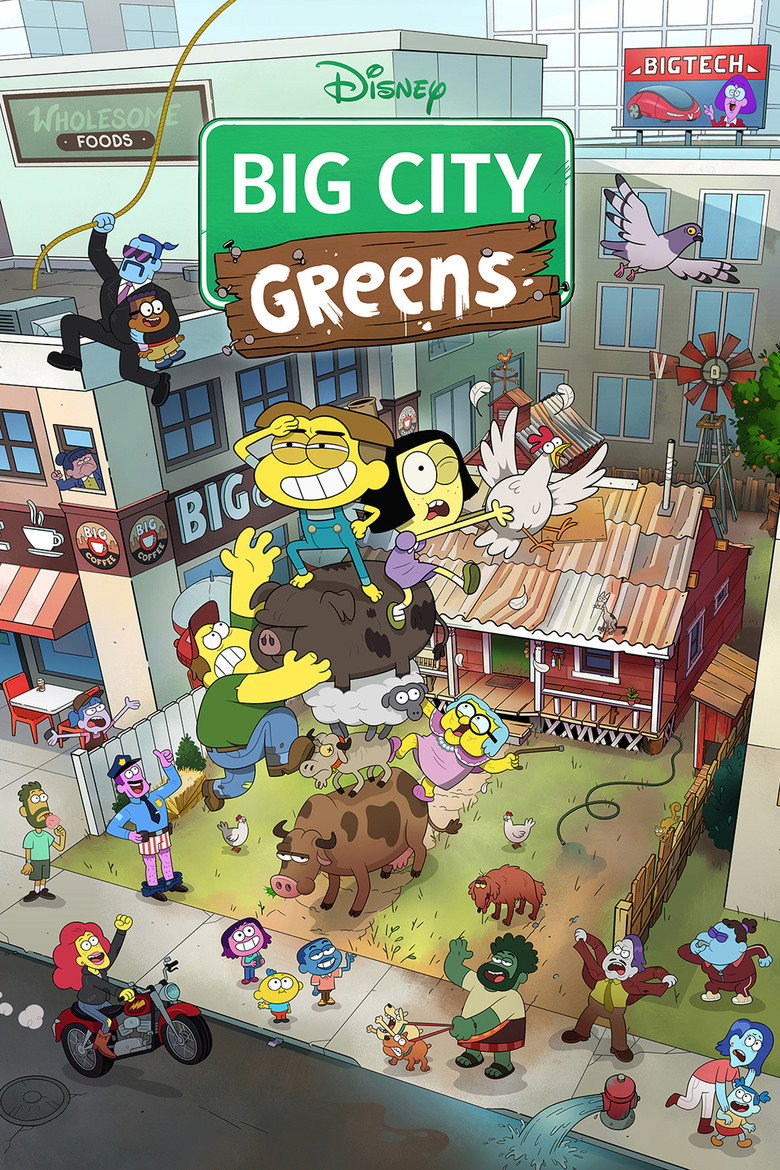
The Greens did not become city people. The city grew over the farm, and they stayed. Cricket is chaos with a good aim. Tilly is odd and loyal. Bill works. Gramma Alice is not cute about discipline. The jokes are loud. The structure under them is a family that still has a crop and a table.
Better than most of the cartoon row because the adults are not fools and the land is not a backdrop. When an episode is only Cricket wrecking something for the laugh, you can leave. When the harvest or the sibling has to be repaired, stay.
Industry
8/10
A farm inside a city. Chores are still the plot, not a montage.
Household
9/10
Father, sister, grandmother, and a boy who is pulled back to them.
Piety
4/10
Gratitude shows up as not selling the land. No creed.
Courage
6/10
They defend the lot against people who want it paved.
Republic
6/10
A block that has to live with one stubborn field.
Temperance
5/10
Cricket's appetite for a scheme is the weekly excess.
Truth
7/10
The family tells the truth about being the odd house on the street.
Stewardship
8/10
The point is that the ground is still theirs to hand on.
Live historicallyGive a child one plant that is theirs to water until something edible comes off it.
07
Wild Kratts: Creatures of the Deep SeaPrime Video · 2016 · Film
Wild Kratts: Creatures of the Deep Sea
Keep it for a child. The facts are the point, and the choice is the right one.
This is the show, given a longer evening: Aviva builds a boat, the brothers go down, and the deep is treated as a place with citizens rather than as a chest of toys. Gourmand is the appetite with a kitchen. The dilemma is old and useful. Do you chase the discovery that would make your name, or do you stop the man who is emptying the water in front of you.
They stop the man. A child can watch it without a speech, and still should get one sentence after: the animal is not a prize. Then look up one real creature they named and see if the cartoon told the truth about how it lives.
Industry
7/10
A vehicle, a plan, a crew with jobs. The science is the work.
Household
6/10
Brothers who stay a pair. The team is the household.
Piety
4/10
Wonder at a living dark. Not worship.
Courage
7/10
They go down, and they go back for the creatures rather than for the credit.
Republic
6/10
A small company against a man who would eat the commons.
Temperance
7/10
The hunter's hunger is the vice, and it loses.
Truth
8/10
The animals are allowed to be real. The fiction is the suit.
Stewardship
8/10
A child leaves with a creature they can describe, which is something to hand on.
Live historicallyLearn the name of one animal that lives somewhere you will never go, and say why it is not yours to collect.
Hospitality with a limit the story respects. Small and sound.
The witch does not collect animals as accessories. Each one helps, each one is a burden, and she says yes until the broom itself objects. That is hospitality with physics. The dragon is a real threat, not a misunderstanding. They answer it together.
It is a short film and it does not pretend to be a scripture. It is a picture of a woman whose power is used to carry others, and of a company that carries her back. A small child can watch it. So can a tired adult who has started to think kindness is only a brand.
Industry
6/10
The broom is a tool. It breaks when it is overloaded. The story admits that.
Household
7/10
A traveling household, assembled on purpose.
Piety
4/10
Magic is a kettle and a kindness, not a religion.
Courage
7/10
They go back for her.
Republic
6/10
A little company against a predator.
Temperance
8/10
Greed is the dragon's. Theirs is sharing.
Truth
7/10
No one is a secret villain in a soft voice.
Stewardship
8/10
It leaves a child the habit of making room.
Live historicallyMake room for one extra person at a real table this week.
Fear faced by understanding, not by a spear. Good for a child who can take a ghost.
Norman is bullied for a gift that is mostly the willingness to hear. The town prefers a mob and a story about a witch. The film's turn, that the cursed child was a frightened child and the curse was the town's, is the right turn. It does not ask you to pretend the dead are cute from the first minute. It asks you to stop the torch.
Some of the jokes are ruder than the fable needs. The fable holds. A house can watch it near Halloween and come out less eager to chant at the odd boy. That is a rare result for a cartoon with zombies.
Industry
5/10
He treats the seeing as a task.
Household
6/10
A family that does not understand him, and a sister who comes anyway.
Piety
5/10
The dead are taken seriously. The mob's ritual is exposed.
Courage
8/10
He walks toward the person everyone else stones.
Republic
7/10
A town's panic is the villain.
Temperance
6/10
Fear is answered, not fed.
Truth
8/10
The witch story was incomplete, and he completes it.
Stewardship
8/10
It hands a child mercy before the pitchfork.
Live historicallyAsk who in your town is feared because no one asked what happened.
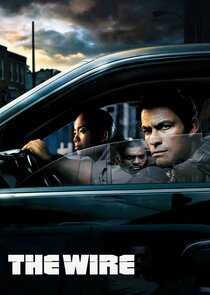
A city, told as work. Grim, adult, and one of the few that believes in a town.
The Wire's argument is that a city is a set of institutions, and a person inside them can be brave and still lose. It does not offer a hero who fixes the block. It offers the block, the shift, and the lie a bureaucracy tells so it can post a number. That is a republican picture, even when every office is failing.
It is also long, violent, and full of a language you do not want in a child's mouth. Watch it as a civic document, not as a cool crime show. The cool is how it gets misused. The use is the question it leaves: what does your town actually count?
Industry
8/10
Police work, stevedoring, teaching, reporting. The jobs are specific.
Household
4/10
Households are damaged by the corners and by the overtime. They are not the subject.
Piety
3/10
A few people act from conscience. The institutions have none left.
Courage
7/10
Individuals risk the career. The system does not reward it.
Republic
9/10
The city is the protagonist. Duty to it is the only adult idea in the room.
Temperance
5/10
The drugs are the economy. The show is sick of them, which is not the same as glamorous.
Truth
8/10
The stat is the lie. The show will not let the lie stand.
Stewardship
7/10
The question of every season is what the city hands the children in it.
Live historicallyGo to one public meeting in your own town. Sit through it.