







































































































Tonight
Ten for the evening
One to ten. Newest, most watched, highest on the Living Meter. Prime, Disney+, Hulu, Hallmark, Acorn, and Netflix.
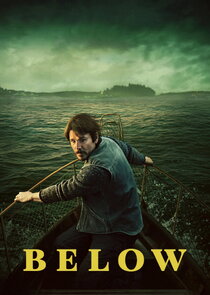
A father, a boat, and a town. The scare is extra. The duty is the point.
Calvin Penney fishes for a living in a Newfoundland town that still knows what a neighbor is. Something under the water starts taking the place apart, and he does the old thing: he stays, he works, he tries to get his son through it. The creature is the advertisement. The story is a man who will not outsource the danger.
You can feel the century pressing on a way of life that does not scale. That pressure is the only horror worth losing sleep over. The show will enjoy a scare more than a sermon, and that is fine. It is aimed at a father, a craft, and a street that would notice if you vanished. Watch it with the people at your table. Then ask who would actually come if the water rose on your block.
Industry
9/10
The work is weather, a boat, and a coast that still needs both.
Household
9/10
A stubborn father who will not hand his son to the dark.
Piety
5/10
Awe shows up as local myth. Conscience is there; a creed is not.
Courage
9/10
He goes toward the thing. That is the whole definition.
Republic
8/10
The unit of the story is a town, not a lone brand.
Temperance
6/10
The fright is seasoned, not worshipped. It is still a thriller.
Truth
7/10
The family secret under the monster is the real bill.
Stewardship
9/10
A trade and a place asked to survive a comfortable century.
Live historicallyDo one piece of work with your hands that your house actually uses. Eat that night with the screens off.
Steinbeck's old question, still the right one: thou mayest.
This is the Trask family: duty, betrayal, and the terrifying permission to choose. Steinbeck named it after the brothers outside Eden, and the series says it is still about trauma and repair, love and betrayal, duty and free will. That is not a costume drama. That is the moral argument a serious household has always been having.
Cathy Ames is the test. She is intelligence without piety, charm without a vow. If the show lets her be a lesson, keep it. If it lets her be a lifestyle, the measure drops. Timshel — thou mayest — is the line worth keeping. You are not doomed to be the worst thing your parents were. Read the novel after, or before. The picture is the invitation. The book is the standard.
Industry
7/10
A California household built by labor, not by a mood.
Household
8/10
Fathers, sons, and the damage a loveless parent can do on purpose.
Piety
8/10
The book underneath is a Genesis argument. Good and evil are chosen.
Courage
7/10
Moral courage is the plot: whether a son will refuse the inheritance of spite.
Republic
6/10
History presses on the family. The town is real, if secondary.
Temperance
5/10
Cathy's glamour is the risk. Cold appetite can become the star.
Truth
8/10
Free will is the whole doctrine. A lie in this story is a soul-event.
Stewardship
8/10
The question is what a father leaves that is not money.
Live historicallyWrite one paragraph to a parent or a child about a choice you are still free to make. Send it, or read it aloud.
A woman, a vow, and an institution she builds on purpose. Keep it.
Cabrini does not wait to be liked by the men who run the city or the men who run the church. She raises money, buys buildings, and refuses to let orphans be a sentiment. The film is on her side, correctly, and it is also a film, so the opponents are simpler than a city is. The work is still the work.
Watch it for the institution. A feeling that does not become a building, a rule, and a Tuesday morning is not yet charity. She understood that. A house that only talks about the poor can sit through this and be addressed.
Industry
9/10
Founding a mission is logistics, politics, and nursing. She does all three.
Household
8/10
The children are the household she is building. Her own health is what she spends.
Piety
9/10
The vow is the engine, and it is not a costume.
Courage
9/10
She walks into rooms that have already said no.
Republic
7/10
A city that owes the immigrant children and does not want the bill.
Temperance
8/10
No glamour in the poverty. The film does not linger for the pain.
Truth
7/10
She tells powerful men what the slum actually is.
Stewardship
9/10
The point is an institution that outlives her.
Live historicallyGive one hour this month to a child who is not in your family.
A congregation that did the hard form of the sermon. Keep it, and count the cost.
The film's claim is specific and checkable. A church in Possum Trot adopted children out of the foster system in numbers that do not make sense for the size of the town. The marriages strain. The children are not grateful on a schedule. The movie, being a movie, smooths some of that. It does not hide that love of this kind is a loss of the life you had.
A house should watch it together and then be careful. The charge is not 'adopt this weekend because the credits said so.' The charge is to stop treating other people's children as a social problem you are sad about. If you cannot adopt, you can still carry the families who did.
Industry
7/10
Foster care is paperwork, nights, and a county office. The film includes the unpretty part.
Household
9/10
Households are remade. The marriage is part of the work, not the reward scene.
Piety
9/10
The sermon is obeyed or it is noise. They treat it as orders.
Courage
8/10
Taking a child who may not love you back is the courage.
Republic
8/10
A church as a real commons, spending itself for the county.
Temperance
8/10
Little appetite. The cost is the point.
Truth
7/10
Based on a town that exists. Do not add miracles the town did not live.
Stewardship
10/10
The whole story is what a people hands to children who were not born to them.
Live historicallyAsk one question of your church or your town: who is taking the children, and how do we help them.
Duty, honor, and a house worth dying for. Not our parish. Very much our standard.
An English pilot washes up in Japan and meets a civilization that already has a full account of duty, rank, beauty, and death. The standard does not require the creed to be ours. It requires that conscience be real, that a word bind, and that people be willing to lose for something larger than a mood. Shogun clears those bars with room to spare.
It is severe. Death is ordinary, strategy is patient, and honor is not a speech you make when the camera finds you. An American in 1800 would have argued with the politics and recognized the spine. Watch it slowly. Then ask which of your own loyalties would survive a quiet test, with no audience and no edit.
Industry
7/10
Translators, sailors, lords, cooks. Everyone has a function.
Household
7/10
Households, heirs, and marriages as political and real bonds.
Piety
7/10
Conscience is everywhere. It is not Protestant, and it does not have to be.
Courage
9/10
Men and women risk death for a line they will not cross. Quietly.
Republic
8/10
Order, loyalty, and the cost of a power vacuum. A state is not a mood.
Temperance
7/10
Violence is grave. It is not a joke and not a snack.
Truth
8/10
Misunderstanding a man's word can get a village killed. Language matters.
Stewardship
9/10
The whole drama is about what kind of country is handed forward.
Live historicallyLearn ten words in a language you owe someone, or read one chapter of a history older than your country. Take it seriously.
A house, a craft, and a village that still needs both. Put this on with the children.
James Herriot arrives with a diploma and almost no authority, and the Dales do not care about the diploma until the work is done. That is the old test, and this telling of it keeps the test. A housekeeper who runs the house, a brother who has to grow up, a farmer's daughter who will not be managed, and animals that are not props. The hours are gentle. They are not empty.
A sick beast is hard to watch, and that is part of the honesty. Help is not a mood. Help is someone competent who comes when called and stays until the thing is finished. If you want one Acorn evening a family can share, start here. Then go do a piece of work that a living thing is waiting on.
Industry
9/10
The plot is the job: a calving, a farm call, a night spent because the animal will not wait.
Household
9/10
Skeldale House is a real household. Marriage is arrived at, not borrowed for a scene.
Piety
7/10
Reverence shows up as care for a creature and a duty kept. It is not a sermon, and it is not a joke.
Courage
7/10
He stays when a city practice would have been easier and cleaner.
Republic
8/10
Darrowby is a small republic of farmers, a housekeeper, and a practice that serves them.
Temperance
8/10
Appetite is not the teacher. Patience is.
Truth
8/10
A diagnosis is a fact. Charm does not replace it.
Stewardship
9/10
What he learns is meant to be handed to the next farmer and the next vet.
Live historicallyFinish one job this week that a person or a creature is actually waiting on. Do not leave it at a good intention.
A mother, a failure, and a household that keeps the meals. The music is the extra.
The father bets the family on a move and the move fails. The film's interest, despite the title's tilt toward the career that comes later, is the mother who keeps seven people inside a life. That is the right interest. Work is painting houses, not the eventual stage. The children are a crew.
A family can watch it. Be honest that it is shaped toward a testimony. The part that does not need the testimony is the part to keep: a house can be poor and still be a house, if someone will do Tuesday.
Industry
8/10
Odd jobs, rehearsals, a budget that does not balance. The labor is shown.
Household
9/10
The mother is the load-bearing wall. The children are not inspirational extras.
Piety
8/10
Prayer is what they do in the kitchen, not a scene they visit.
Courage
7/10
Staying in the country after the plan fails is the courage.
Republic
5/10
A church helps. The town is mostly the house.
Temperance
8/10
Want is put down so the children can eat.
Truth
7/10
The father has to admit the plan broke.
Stewardship
8/10
What she keeps is the people, long before anyone is famous.
Live historicallyCook one week of ordinary meals without announcing the sacrifice.
The rare one that tells the truth about a boy lost in the feed. Sit with it.
A boy is arrested. The series stays in the room: police, school, a father, a mother, the ugly weather of phones. It does not offer you a monster you can exile from your own kitchen. It offers a child, a culture that talks to boys when their parents are tired, and the sickening chance that nobody asked a second question.
This is the standard at its most uncomfortable, because it is aimed at you. Not at a pirate, not at a dynasty. At a house that meant well. It is not a pleasant evening and it should not be. If you have a son, or teach one, or were one, sit through it and then go look at what the glowing rectangle has been teaching in your place. Living historically starts by refusing to be a stranger to your own child.
Industry
6/10
Work and school are the ordinary world the crime interrupts.
Household
9/10
The whole measure is a household that loved a child and did not know him.
Piety
6/10
No sermon. A severe conscience about what adults owe the young.
Courage
8/10
The camera refuses to look away. So do the best of the adults.
Republic
8/10
A town, a school, a police, a family: the web that was supposed to hold.
Temperance
7/10
The internet's appetite is the accused, not the entertainment.
Truth
9/10
It is obsessed with what was missed, said, and lied about.
Stewardship
9/10
Posterity is the subject. A boy is the future, and the future is in the room.
Live historicallyPut the phones in another room for one meal and one hour after. Ask a boy what he is actually seeing online.
Parents who are still the parents. Soft, and the softness has a spine.
Karen Kingsbury's family is a picture of a house that still thinks parents owe their grown children a standard, and the children owe the house a hearing. The conflicts are the ones a family actually has: a marriage under strain, a child who wants a different life, a faith that has to be more than the decor. The executions are gentler than the conflicts.
Watch it if your house is tired of shows where the parents are the obstacle to the real life. Do not watch it as a documentary. It is a story with a position. The position is that a family is not finished when the children can drive.
Industry
6/10
Work and a town job are in the week, not only the crisis.
Household
9/10
The family is the subject. Vows are repaired instead of replaced.
Piety
8/10
Faith is practiced at home, including when someone in the house doubts it.
Courage
6/10
The courage is a conversation that could split the table.
Republic
6/10
A neighborhood that knows the name. Not a private brand.
Temperance
8/10
Restraint is the method.
Truth
8/10
The plot moves when someone stops managing the truth.
Stewardship
8/10
What they are keeping is the house for the children who are not the crisis yet.
Live historicallyPut one hard conversation at a table, and do not leave the table in the middle of it.
A town, a school, and a marriage that has to be lived. Put this on with children in the room.
Elizabeth comes west with a diploma and a name, and the town asks her to be useful instead. That is the old bargain, and the show keeps it. A school, a mountie, a widow, a store, a main street where people know who is missing at supper. It is gentle on purpose. Gentleness is not the same thing as emptiness.
The formula is there. A misunderstanding, a festival, a kiss at the right hour. Do not let the formula talk you out of the thing the formula is carrying: a woman who will not abandon a classroom, a man who will not abandon a town, and a house that gets built in public. If you want one Hallmark hour for a child who is old enough for a story with a funeral in it, start here.
Industry
8/10
Teaching, mining, shopkeeping. The town eats because people work.
Household
9/10
Courtship ends in a household. Children are the point of the street, not the prop.
Piety
8/10
Grace is said, and a conscience is allowed to interrupt a plan.
Courage
8/10
She stays when the comfortable life is still available behind her.
Republic
8/10
A small town is treated as a real government of neighbors.
Temperance
8/10
Appetite does not get the last word. A vow does.
Truth
8/10
People tell the truth late, and the story makes them pay the lateness.
Stewardship
9/10
The schoolroom is what they leave the next child.
Live historicallyDo one useful thing for a child who is not yours this week. A ride, a lesson, a meal, a seat saved.