Tonight
Ten for the evening
One to ten. Newest, most watched, highest on the Living Meter. Prime, Disney+, Hulu, Hallmark, Acorn, and Netflix.
A small holiday special. Kind, and enough.
A Halloween picture that takes a child's size seriously. The fest is for the block. George is not taught to enjoy fear. He is taught to join in. There is no cruelty and no twist. The desk does not need it to be more than that.
If the house wants October without a butcher's laugh, this is one of the ones that qualifies.
Industry
3/10
A neighborhood putting on a fest.
Household
6/10
The man in the yellow hat stays the guardian.
Piety
2/10
A holiday.
Courage
3/10
Small bravery, a costume, a dark street.
Republic
6/10
A block doing something together.
Temperance
7/10
Fright is not the good being sold.
Truth
6/10
Plain as it looks.
Stewardship
6/10
Scaled to a child.
Live historicallyMake the holiday fit the youngest person on the street.
Friendly and minor. A town where people have roles.
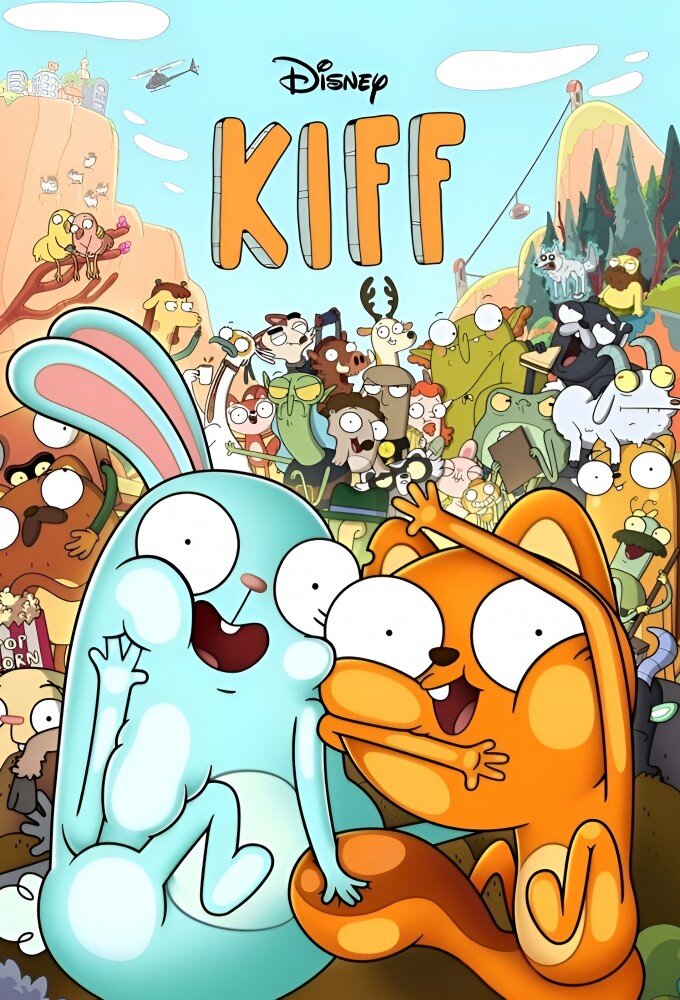
Kiff is a current cartoon that is not trying to injure anyone. The stories are about embarrassment, friendship, and a town that continues. That is enough for a younger child and not enough to build a mind on. Use it as a rest, not as the whole diet.
Industry
4/10
The town has jobs. The plots are play.
Household
5/10
A family, lightly drawn, and a best friend who is constant.
Piety
2/10
No creed.
Courage
3/10
Social bravery: the party, the tryout.
Republic
4/10
A neighborhood that functions.
Temperance
7/10
Kind.
Truth
5/10
The emotions are the stated size. It does not inflate them.
Stewardship
4/10
A friend is something you keep.
Live historicallyAfter it, the child does something in the actual town: a walk, a shop, a neighbor.
People who want credit for goodness. Uncomfortable, and accurate. Not a comedy to relax with.
Whitney wants to be seen helping. Asher wants to be seen agreeing. The girl with the soda is the only person in the pilot who says a true thing about a purchase, and they treat her as a hex. That is the moral, and it is a good one.
Adults who can stand to watch themselves. If you only enjoy how awful they are, you have joined the audience they are filming for.
Industry
5/10
They are producing a series. The labor is real and aimed at their image.
Household
3/10
A marriage that performs closeness. The house is a set.
Piety
2/10
A curse instead of a conscience, until the conscience and the curse are the same discomfort.
Courage
3/10
They risk embarrassment, not themselves.
Republic
4/10
A town being improved on camera is a civic lie the show is willing to expose.
Temperance
4/10
The cringe is the method. It is not sadistic, and it is not kind.
Truth
9/10
It will not let a staged good deed count as a good deed.
Stewardship
4/10
The town will still be there when the crew leaves. The show knows.
Live historicallyDo one useful thing this week that you do not photograph and do not describe.
Making is a good verb. Naming the machine after excrement is the tell. The craft is real. The giggle is the cheap part.
The continue card tells you the tone before you press play: a catapult with a bathroom name. Under the name, people are still measuring, failing, and rebuilding. That half is worth a thirteen-year-old's afternoon once. The half that needs the joke to be disgusting is the half the platform thinks she came for.
Watch the build. Mute the naming. If she only laughs at the word, you have your answer.
Industry
7/10
Somebody designed it, cut it, and found out if it stood.
Household
3/10
A shop, not a family.
Piety
2/10
No reverence. A lot of delight, some of it bathroom.
Courage
4/10
They test the thing in public.
Republic
3/10
A contest.
Temperance
4/10
The gross-out is the title. The build is better than the title.
Truth
6/10
A machine either works or it doesn't. That is a clean truth.
Stewardship
5/10
Skill you could copy. A joke you should not need.
Live historicallyBuild one small thing that has to work: a hinge, a ramp, a repair.
A bright girl and a kind, ordinary man. The laugh is that she is smarter than the room. Mild, and a little smug.
Ashley is easy to like and the show is easy to forget, which is the right size for a continue-tile and the wrong size for a habit. The uncle who shows up is the moral fact. The scripts keep undercutting him so the prodigy can win the scene.
Fine at thirteen. If you watch it, side with the adult once, out loud, when he is the one being sensible.
Industry
6/10
Robots, a lab, a mind that works. The uncle's job is coaching, and it counts.
Household
6/10
An uncle who takes her in. That is a household, played for jokes.
Piety
2/10
Brains as the ranking.
Courage
3/10
Sitcom risks.
Republic
3/10
A house, not a town.
Temperance
6/10
Nickelodeon-clean, mostly.
Truth
4/10
It knows she can be wrong socially. It rarely lets the uncle be right.
Stewardship
4/10
A gift for building. Also a lesson that the regular adult is the joke.
Live historicallyLet the teenage expert in your house teach you one true thing, and then teach her one she does not know.
Grief is the true story. The series keeps selling a cheaper one.
Devi is funny, specific, and in pain, and Mindy Kaling knows how to write a girl who is too much for the room. That is worth respecting for ten minutes. The series then decides the way through a father's death is a sexual résumé, and it coaches the audience to cheer the résumé. A mother who holds a standard is written as the person Devi must escape.
Not for Annie's age, and a poor gift at fifteen. If an older teen has seen it, the conversation is not optional: what the show calls freedom, and what it cost the house.
Industry
5/10
School and a mother's medical work are visible. They lose screen time to the crush.
Household
5/10
A widowed mother and a cousin's household are real. The lesson offered to the daughter is a boy.
Piety
3/10
A Hindu home is sometimes honored and sometimes the obstacle to the plot's fun.
Courage
4/10
She is brave about grief in flashes, then spends the courage on a reputation.
Republic
4/10
Friends are loyal. The wider town is a high school.
Temperance
2/10
The show's idea of growing up is appetite, narrated as liberation.
Truth
5/10
It is honest that she is angry and unkind. It is less honest that this is healing.
Stewardship
3/10
A father's memory deserved better heirs than a checklist.
Live historicallyAsk what your house thinks growing up is for, before a show answers for you.
A bright city, a careless heart, and a show that thinks chaos is charm.
Kitty Song Covey was the lively child in a better story about letters and a household of sisters. Set loose, she becomes the engine of a boarding-school farce: passports, matches, secrets read that were not hers. The city is handsome. The habit being taught is that a busy girl may arrange other people and call it love.
Not for the young ones. An older teen who already lives online will not be improved by it. If the house wants Seoul, pick a story where someone is actually trying to learn the place.
Industry
4/10
School is the address. Study is the interruption.
Household
4/10
A sister and a late mother are the excuse. The plot is crushes.
Piety
2/10
Seoul is a backdrop. The soul is not in the shot.
Courage
4/10
She gets on a plane. Then she lies to stay in the story.
Republic
4/10
A boarding house has rules. She treats them as obstacles.
Temperance
3/10
Meddling is the joke, and other people's privacy is the cost.
Truth
4/10
She wants a true family story and uses false ones to get it.
Stewardship
3/10
Nothing is being kept for the person who comes next, except a sequel.
Live historicallyAsk the teen in the house which of her plans are hers, and which are her managing someone else.
A girl who wants a family more than a crown. The history is a romance, not a record.
The film turns a murdered imperial family into a fairy tale. Know that before you put it on, and do not let a child leave thinking the history was this gentle. Inside the fairy tale, Anya wants a grandmother, not a title, and Dimitri's con science is converted into loyalty. Rasputin is a curse, not a political lesson.
Watch it as a story about a girl and an old woman finding each other. Say, if anyone is old enough, that the real house of Romanov did not get this ending.
Industry
5/10
A con, then a journey. Work is thin.
Household
8/10
The good is a grandmother and a name, not a throne.
Piety
3/10
A curse stands in for history.
Courage
6/10
She goes toward the city and the truth of who she is.
Republic
3/10
A court, romanticized.
Temperance
6/10
His greed gives way.
Truth
5/10
The film tells a kinder story than the century did. Know that.
Stewardship
7/10
What is restored is a family bond, and that part is the true want.
Live historicallyWant the people, not the palace.
Macabre jokes with a baby at the center. Fine for a family that already likes them and can take a mean wit.
Wednesday remains the conscience, which is a joke and also true. The camp is a bright tyranny of smiles, and the film is on the side of the children who will not perform it. Pubert is a baby the family actually wants. That want is the warm fact under the punchlines. The jokes are sharper than the first film, and some of them are only sharp.
A house with young children who frighten easily should wait. A house that can hear a satire of cheerfulness without copying the cruelty can laugh and still put the baby to bed like a normal gang.
Industry
4/10
Little labor. A household of hobbies.
Household
7/10
They want the child. The camp is the false family.
Piety
3/10
Ghoulish, not devout.
Courage
6/10
Wednesday will not smile on command.
Republic
5/10
A satire of the enforced good time.
Temperance
5/10
The meanness is the spice and the risk.
Truth
7/10
The camp's kindness is shown to be a costume.
Stewardship
6/10
It hands on a refusal to pretend.
Live historicallyDefend one child who does not fit the camp.
Ernest is ridiculous and brave. The troll is not a friend. A Halloween yes, with the lights on.
A troll turns children into wooden dolls, which is a child's nightmare of being made not-alive. Ernest, the town joke, is the descendant appointed to stop it. The film is broad and cheap and on the children's side. The adults who mock him are wrong. The troll is not given a sad speech.
For a family that wants a scare with a happy, loud ending. Not art. Not cruel. The fool goes under the tree because the children cannot.
Industry
4/10
A sanitation man. The work is showing up.
Household
5/10
He cares about the kids the town finds annoying.
Piety
3/10
An old curse, a milk-and-love remedy played straight enough.
Courage
7/10
He is terrified and he goes.
Republic
5/10
A town that will not believe him until the dolls pile up.
Temperance
6/10
The troll's hunger is the vice.
Truth
6/10
The children were right that something was under the tree.
Stewardship
7/10
The charge is the children, and he keeps it.
Live historicallyThe useful person may be the embarrassing one. Let them help.